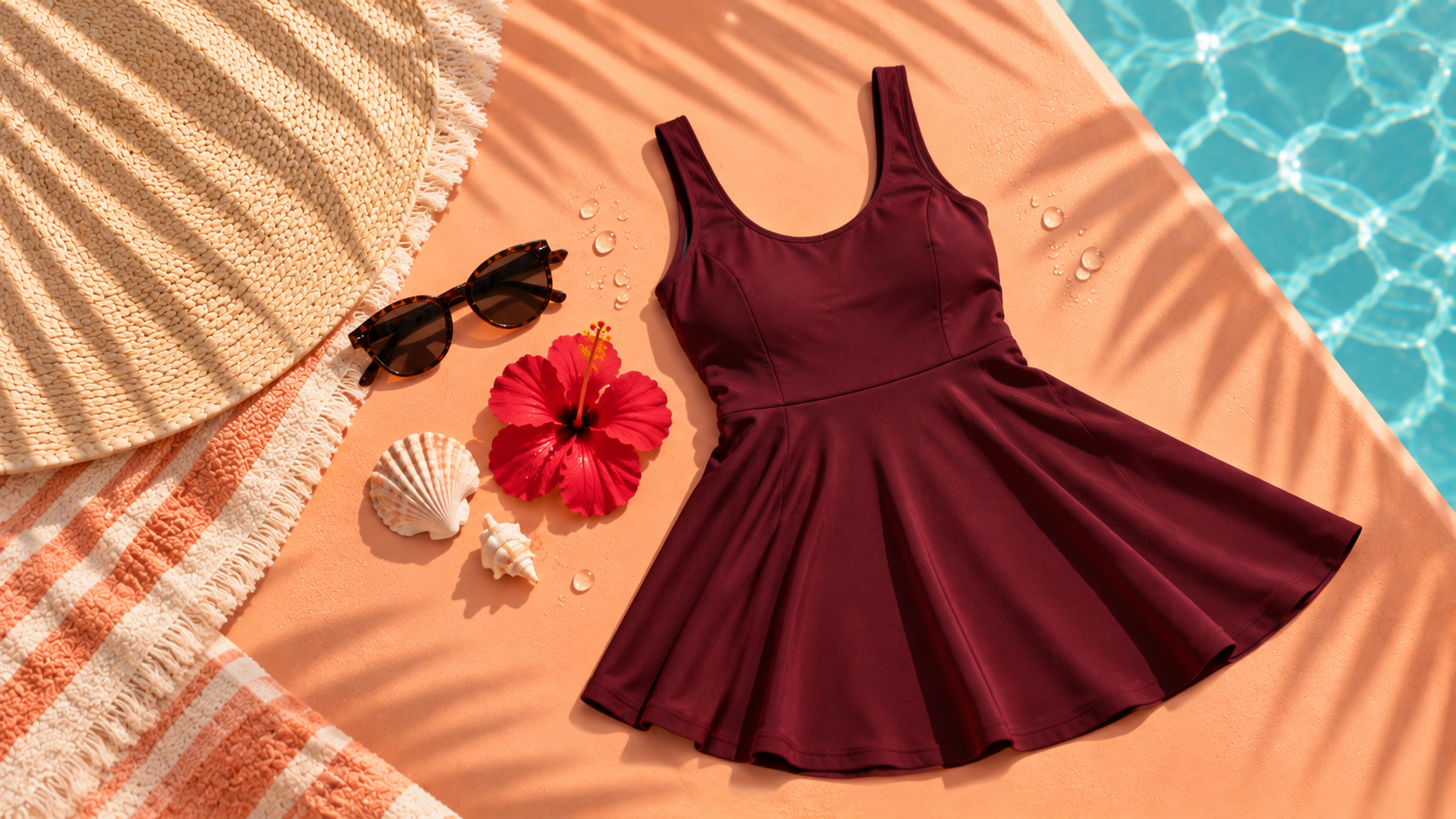
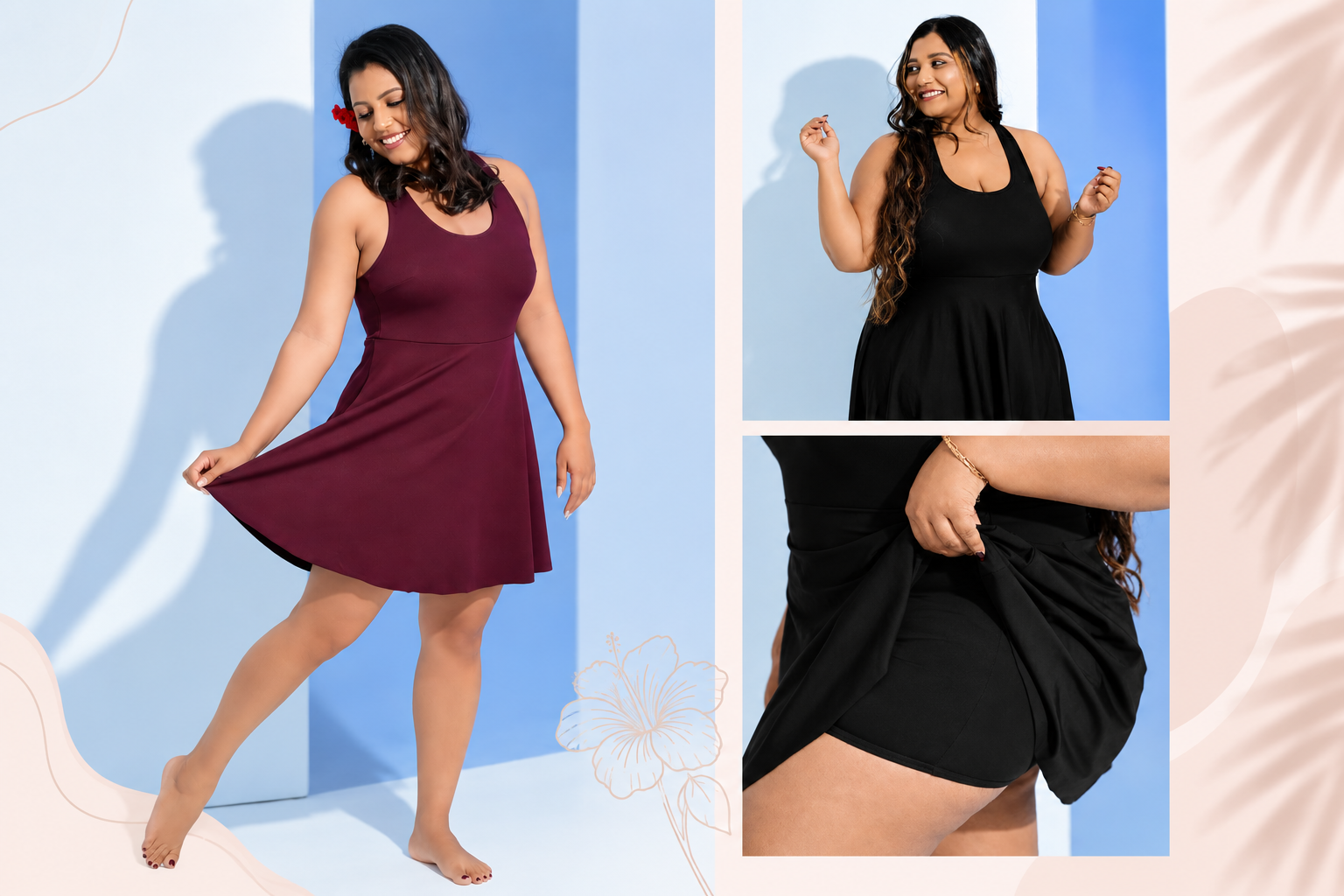
A swimwear dress, also called a swim dress, combines the functionality of a swimsuit with the feminine silhouette and added coverage of a dress. Unlike a regular summer dress, it is designed using swim-appropriate fabrics and construction so it can actually be worn in the water.
For women who want something comfortable, flattering and a little more covered than a traditional swimsuit, a swimwear dress can be an ideal alternative.
What Exactly Is a Swimwear Dress?
A swimwear dress typically features a fitted swimsuit-style upper body combined with a skirted bottom.
Depending on the design, it may also include:
Built-in shorts or briefs
Built-in or removable bust cups
Stretchable, quick-drying fabric
Adjustable straps
Supportive lining
Different skirt lengths and silhouettes
The important distinction is that a swimwear dress is made for swimming. It may look like a mini dress, but its materials and construction are designed with water, movement and comfort in mind.
Why Are Swimwear Dresses Becoming Popular?
Not every woman feels comfortable wearing a bikini or a traditional one-piece swimsuit.
At the same time, many women don't necessarily want extremely full-coverage swimwear either.
A swimwear dress sits beautifully between the two.
It provides more coverage while still maintaining a feminine, modern silhouette. This makes it particularly appealing for beach holidays, hotel pools, resorts, girls' trips and tropical getaways.
For women in Sri Lanka, it can also offer a practical balance between feeling comfortable in public spaces and still wearing something designed specifically for swimming.
Can You Actually Swim in a Swimwear Dress?
Yes — provided that the garment is specifically designed as swimwear.
A proper swimwear dress should use stretchable, water-appropriate materials that allow movement in and out of the water.
This is why swimming in an ordinary dress is very different from swimming in a purpose-designed swim dress. Everyday fabrics can become heavy when wet, restrict movement and take considerably longer to dry.
A swimwear dress is constructed specifically with these concerns in mind.
Do Swimwear Dresses Have Shorts Underneath?
Some do, and some don't.
Many modern swimwear dresses feature built-in shorts underneath the skirt. This gives additional coverage while walking, sitting, swimming or enjoying activities around the beach.
It's particularly useful when you want the appearance of a dress without constantly worrying about how the skirt is moving.
At Darlu & Co., selected swimwear designs incorporate discreet shorts specifically to give women greater freedom and confidence while moving.
Are Swimwear Dresses Only for Certain Body Types?
Absolutely not.
One of the advantages of a swim dress is the number of silhouettes that can be created.
A-line skirts can provide a softer silhouette around the hips, while fitted bodices can create definition around the waist. Different necklines, straps, skirt shapes and lengths can also dramatically change how a swim dress looks and feels.
Instead of asking "Do I have the right body for a swim dress?", a better question is:
"Which swim dress silhouette makes me feel most comfortable?"
The right swimwear should work with your body—not require your body to fit a particular trend.
Swim Dress vs One-Piece Swimsuit
The biggest difference is coverage and silhouette.
A traditional one-piece swimsuit generally follows the shape of the body from the bust through the hips.
A swimwear dress introduces a skirt over the lower portion of the swimsuit. Depending on its construction, shorts may also be incorporated underneath.
This creates a noticeably different look while maintaining the functionality expected from swimwear.
Neither option is inherently better. The right choice comes down to your preferred coverage, style and comfort.
Is a Swimwear Dress the Same as Modest Swimwear?
A swim dress can be modest swimwear, but the terms aren't interchangeable.
"Modest swimwear" describes a broad category of swimwear offering additional body coverage. This can range from slightly longer swimsuits and swim dresses to full-length burkini-style sets with sleeves, leggings and head coverage.
A sleeveless, above-the-knee swim dress therefore offers more coverage than many traditional swimsuits, but it may not meet every woman's personal or religious definition of modest swimwear.
Understanding that distinction is important when choosing swimwear based on your own comfort and coverage requirements.
What Should You Look for When Buying a Swimwear Dress?
Start with fabric and fit, rather than appearance alone.
The fabric should stretch comfortably, retain its shape and be appropriate for getting wet. Check whether the garment becomes excessively heavy in water and whether lighter colours or fabrics maintain adequate opacity when wet.
Then consider practical details such as bust support, lining, built-in shorts, skirt length and strap construction.
Finally, think about what you'll actually be doing in it.
A swimsuit for serious swimming may have different requirements from something you're buying for a relaxed Maldives holiday, a hotel pool or a weekend in Mirissa.
Can You Wear a Swim Dress Outside the Pool?
This is one of the reasons swimwear dresses are so versatile.
Depending on the design, a swim dress can transition much more naturally from the water to a resort, beach café or poolside setting than traditional swimwear.
Throw on sandals, sunglasses and a cover-up or oversized shirt and you have an easy vacation outfit without immediately needing to change.
That swim-to-casual versatility is also an important part of the design philosophy behind Darlu swimwear.
How Should a Swimwear Dress Fit?
A swim dress should generally feel secure around the bust and torso without restricting movement.
Remember that swimwear fabric behaves differently when wet, so something that already feels loose when dry may not provide the support you expect in the water.
Pay attention to:
Bust: Secure without uncomfortable compression. Straps: Should remain comfortably in position while moving. Waist: Supportive without digging into the body. Shorts: If included, they shouldn't constantly roll upward. Skirt: Should provide your preferred coverage without becoming unnecessarily restrictive.
Always use the individual brand's size guide rather than assuming your usual clothing size will translate perfectly to swimwear.
Who Is a Swimwear Dress Best For?
A swim dress can be a great choice if you:
Want more coverage than a conventional swimsuit, love feminine silhouettes, prefer built-in shorts, want swimwear that feels appropriate in multiple settings, or simply feel more like yourself wearing a dress.
Ultimately, swimwear shouldn't be about hiding your body.
It should allow you to swim, move, travel and enjoy the moment without constantly thinking about what you're wearing.
Finding Your Darlu Swimwear Dress
At Darlu & Co., we're exploring swimwear from a slightly different perspective: pieces that feel feminine enough to love as fashion while remaining functional enough to actually swim in.
Our swimwear dresses are designed for women looking for that balance of coverage, comfort and style, particularly for Sri Lankan beach days, hotel stays and tropical getaways.